
A biopsy is performed when we need a diagnosis. It means taking a small sample of a spot and sending it to the laboratory so a pathologist can examine it under the microscope.
The goal is information. Once we know exactly what it is, we can decide what treatment, if any, is required.
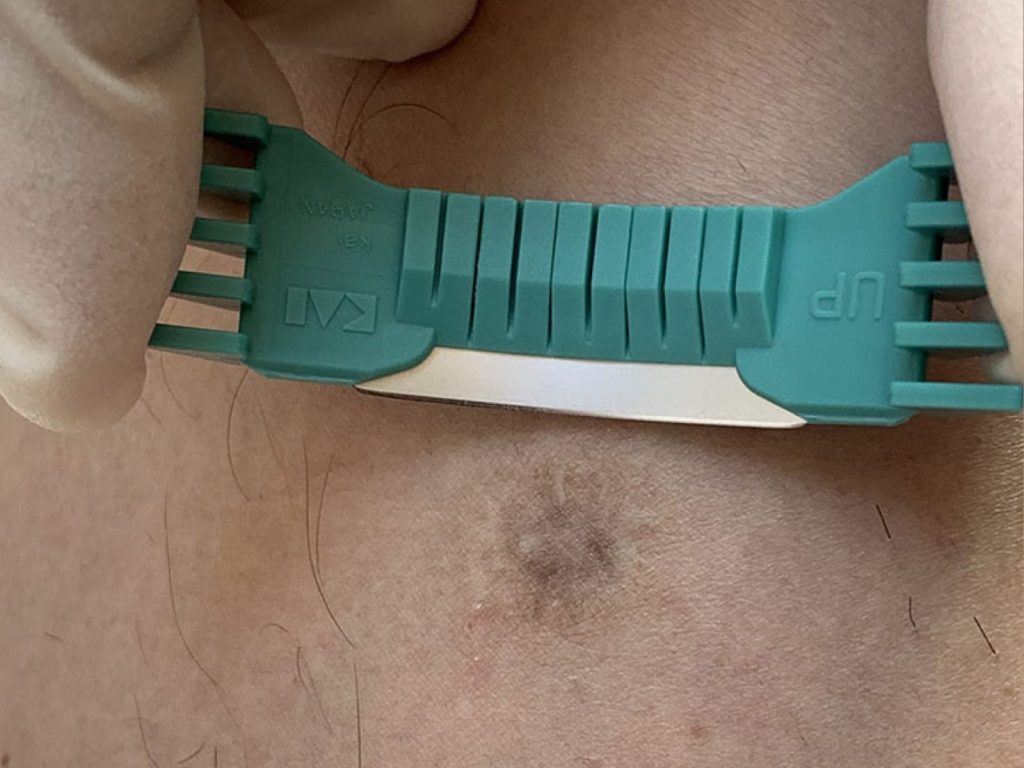
Shave Biopsy – A thin layer is gently shaved off the top of the spot. This is often used for superficial lesions.
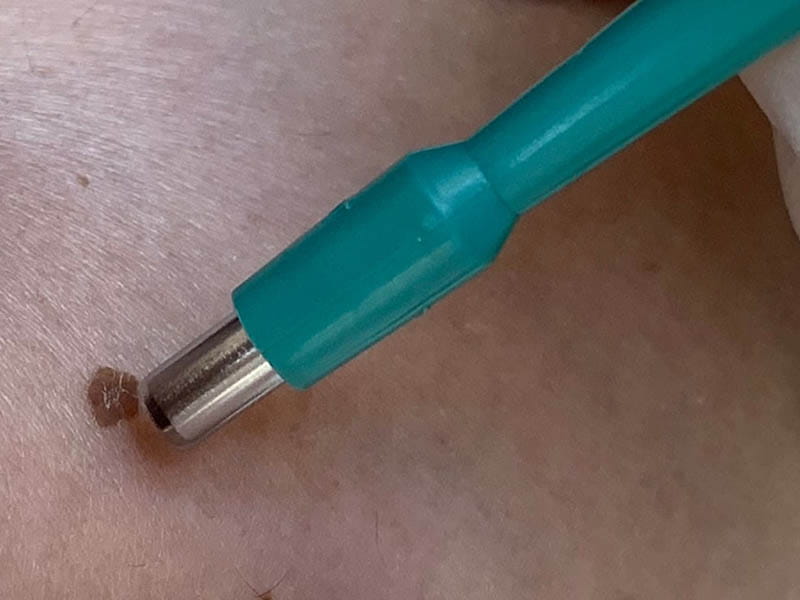
Punch Biopsy – A small circular core is taken from the middle of the lesion. This gives us a full thickness sample of skin.
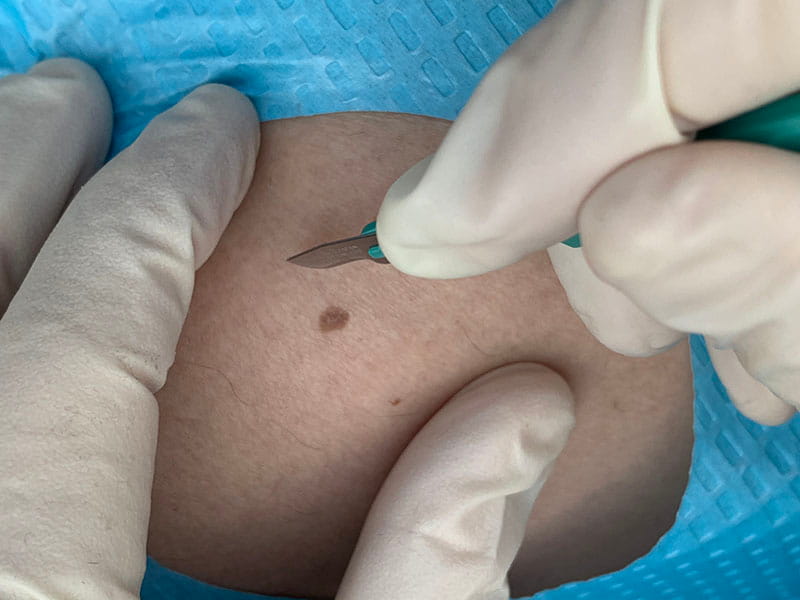
Excisional Biopsy – The entire spot is removed, but only with a very small rim of normal skin around it. This is still considered a diagnostic procedure because the margins are narrow and not designed for cure in higher risk cancers.
Different spots suit different biopsy types. The choice depends on what the lesion looks like, where it is located, and what we are most concerned about.
When removing a skin cancer with the intention of curing it, the surgery is different to a biopsy.
Instead of taking a small biopsy sample:
This makes the procedure and scarring larger, and sometimes the closure more complex.
The intent here is diagnosis (biopsy) verses treatment (total removal).
When removing a skin cancer, the final scar is often larger than patients expect. This is because skin cancers are usually removed in an elongated ellipse rather than a simple circle, allowing the wound to close more neatly and heal with a better cosmetic result.
Once surgical margins are included to ensure complete removal, even a small lesion can result in a scar longer and wider than the original spot.
In some situations, a biopsy may be recommended first to confirm the diagnosis. This can help guide treatment and may avoid a larger procedure if the lesion is found to be benign (non-cancerous).

Many patients say, “If you think it might be cancer, can we just remove the whole thing?” Sometimes we can. But we do this carefully.
I am usually comfortable removing something without a prior biopsy when three things are true:
The goal is to avoid unnecessarily large surgery for something that turns out to be benign, especially on visible areas such as the face.
The right approach depends on the spot, the location, and balancing diagnostic certainty with cosmetic outcome.
If you are ever unsure why a biopsy is recommended first, please ask. We are always happy to explain the reasoning behind the plan.