Skin cancers can develop anywhere on the body, and some may be difficult to see or recognise yourself.
Our qualified team of GP’s have all undertaken advanced training in skin cancer diagnosis and management and provide comprehensive skin examinations to help identify suspicious moles, spots and other changes that may require further investigation.
Skin checks save lives. Detecting skin cancer early means it can often be treated simply and offers the best chance of cure.
Anyone can develop skin cancer, but some people are at higher risk. You should have regular skin checks if you:
Note: Melanoma is also the most common cancer in young Australians aged 15–39. You can check your individual risk at scanyourskin.org.
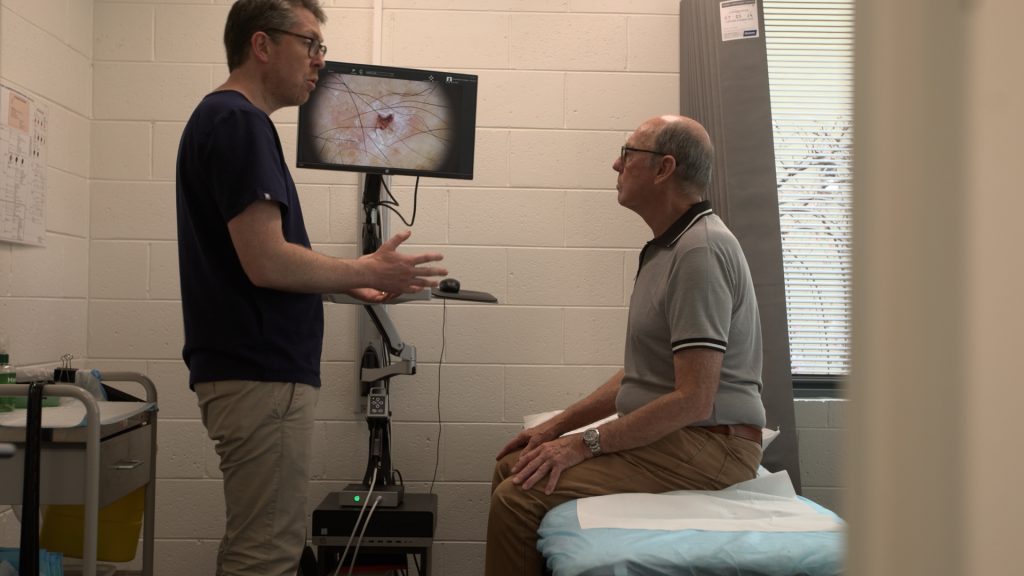
Your doctor will review your medical history, check your skin from head to toe using a special magnifying light called a dermatoscope, and discusses any spots of concern. Our skin checks are simple and thorough. Here’s what to expect:
Your doctor will ask you about your health and skin history and to remove any:
This helps your doctor examine your natural skin and nails without any inhibiting items that may distort any spots or lesions.
You’ll usually be asked to undress to your underwear so all your skin can be thoroughly checked.
If you feel uncomfortable – Your privacy and comfort are important to us. If at any stage you feel uncomfortable, we can adjust the the examination to what feels right for you. We’ll work with you to make the experience as comfortable as possible.
Your doctor will examine your skin from head to toe, including scalp, nails, and soles of the feet.
A dermatoscope (a special magnifying light) is used to view structures not visible to the naked eye.
Total Body Photography can provide a detailed baseline record of your skin, helping changes to be monitored over time.
Your doctor will explain your results and recommend the appropriate next steps:
No concerns: No suspicious spots.
Monitor: Certain spots may be photographed and monitored for changes.
Biopsy: A suspicious spot may require a skin biopsy.
Removal: Some spots may require excision.
This is also your opportunity to ask any questions you may have.
Most spots are harmless, but having anything concerning properly assessed can provide valuable reassurance.
Our skin checks provide an opportunity to:
At MP Skin Check, the first TBP session is complementary – Total Body Photography is a series of high-resolution images taken of your skin to create a visual record of your moles and lesions. Our doctors utilise the AI-powered software to compare images over time, giving an extra level of accuracy in spotting changes that might otherwise go unnoticed.
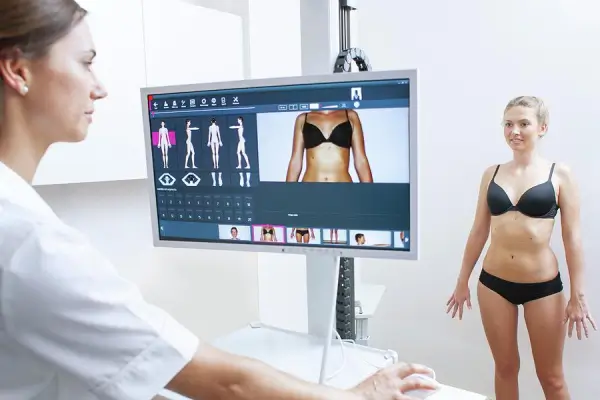
Total Body Photography creates a detailed photographic map of your skin to track even the smallest changes over time.
Melanoma Institute of Australia, may recommend TBP if you have:
Benefits of TBP

Our team of qualified GP’s with advanced training in skin cancer medicine see patients from all over Melbourne for appointments including Mount Martha, Mornington, Safety Beach, Mount Eliza, Dromana, McRae, Rosebud, Red Hill, Frankston South, Rye, Blairegowrie. Sorrento and surrounding suburbs.