
Chemical Peels are a great way to improve acne, skin tone, skin texture and reduce the appearance of freckling, pigmentation, and wrinkling.
Find out how chemical peels could help improve the appearance of your skin.
A chemical peel is a procedure in which a natural chemical solution is applied to the skin to remove the top layers of the skin to reveal the fresh, new skin layers.
At MP Skin Aesthetics we offer different solutions and strengths of peel to suite your specific goals, skin condition and skin type.
During your consultation your Clinician will discuss with you:
This process helps prepare your skin, reduce risks and to ensure optimal results from your treatment. At MP Skin Aesthetics our Chemical Peels are based on organic compounds.
Chemical peels involve the careful exfoliation of the skin using a natural based acid.
The acid removes a uniform amount of damaged skin cells across the treatment area. This allows the skin to heal and grow back smoother as a result of the treatment.
Chemical Peels can be done at different depths, from superficial, medium and deep. Medium and deeper chemical peels offer more-dramatic results but also take longer to recover from.
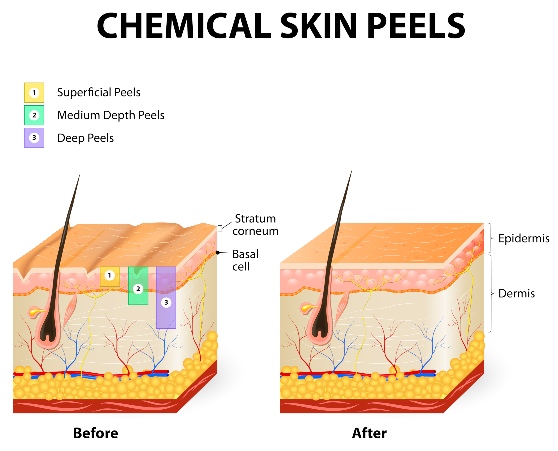
Chemical peels are used to exfoliate different levels of the skin to a specific skin depth to help treat ageing skin, fine lines, wrinkles pigmentation, acne (including blackheads and whiteheads), breakouts, dry/dehydrated skins and congested skin.
There are three levels of skin peels:
The goal is to stimulate new skin growth and improve skins surface texture and appearance. The exfoliative effect of chemical peels strips the upper epidermal layers and stimulates new epidermal growth and collagen.
At MP Skin Aesthetics our Clinicians are trained in the latest specialist proven techniques and keep abreast with the latest research in skincare treatment. We strive for exceptional patient service and leading cosmetic and medical care.

When performed correctly by a highly trained and experienced Clinician at MP Skin Aesthetics, Chemical Peels are safe. Combining expert training and experience with high quality Chemical Peels are crucial to achieving great results.
All new patients will need a consultation before any work is undertaken to assess your needs, develop an appropriate treatment plan and discuss the risks and results.
Here is a checklist of items to be aware of:
The benefits of Chemical Peels include:
At MP Skin Aesthetics we only use the highest quality Acne Treatments approved by the Australian Therapeutic Goods Administration (TGA).
What happens during your treatment – At MP Skin Aesthetics we work hard to ensure you have all the information you need to help you make a decision and feel comfortable with your individual treatment plan.
Your clinician will discuss with you your goals and assess your treatment needs. This process enables your clinician to tailor the treatment to your specific skin condition needs and target the areas for treatment.
Skin Peel Procedure:
Step 1: Skin consultation – We will discuss with you your concerns and throughly explain the treatment and aftercare process.
Step 2: Skin Preparation – Your skin is thoroughly cleansed. You will experience a gentle tingling sensation as the peel is applied to your skin. Most patients experience minimal to no discomfort during the treatment.
Step 3: Aftercare – Directly after your treatment a serum and sunscreen is applied to the skin. The area may feel warm and slightly pink. Mineral make up may be applied to the skin.
Treatment times – Chemical Peels can last anywhere from 30 minutes to 60 minutes
Treatment frequency – This will depend on the level of skin peel and your initial results and healing time from the skin peel. Your Clinician will discuss your results with you and any post care or follow up treatments.
The vast majority of patients for:
Superficial and medium peels – Feel a nothing more than a mild tingling with minimal discomfort.
Your Clinician will discuss with your your pre-peel preparation and post-peel care.
Mild Side effects – Side effects in most patients are mild and may include:
If you have any other reaction please contact the MP Skin Aesthetics
Superficial Chemical Peel – Minimal recovery time needed and most patients resume their normal routine immediately. Your skin may temporarily be lighter or darker. Immediately after the peel, your skin may feel tight and you may experience a little redness on the treatment area.
Within 2-3 days, skin may look flaky as the outermost surface peels off to make room for more radiant, new skin. You may also notice temporarily more pronounced discolouration or age spots as they rise to the skin’s surface before getting sloughed away.
Your skin is more delicate after a peel, so please avoid direct sun exposure.
Medium Chemical Peels – Your skin will recover about 5-7 days after a medium chemical peel, though you may have redness that persists for a few weeks. Your skin may initially swell, and then form crusts and brown blotches before revealing new skin.
Some additional tips include:
Your Clinician will discuss with you your individual post treatment care plan.