
Biopsies

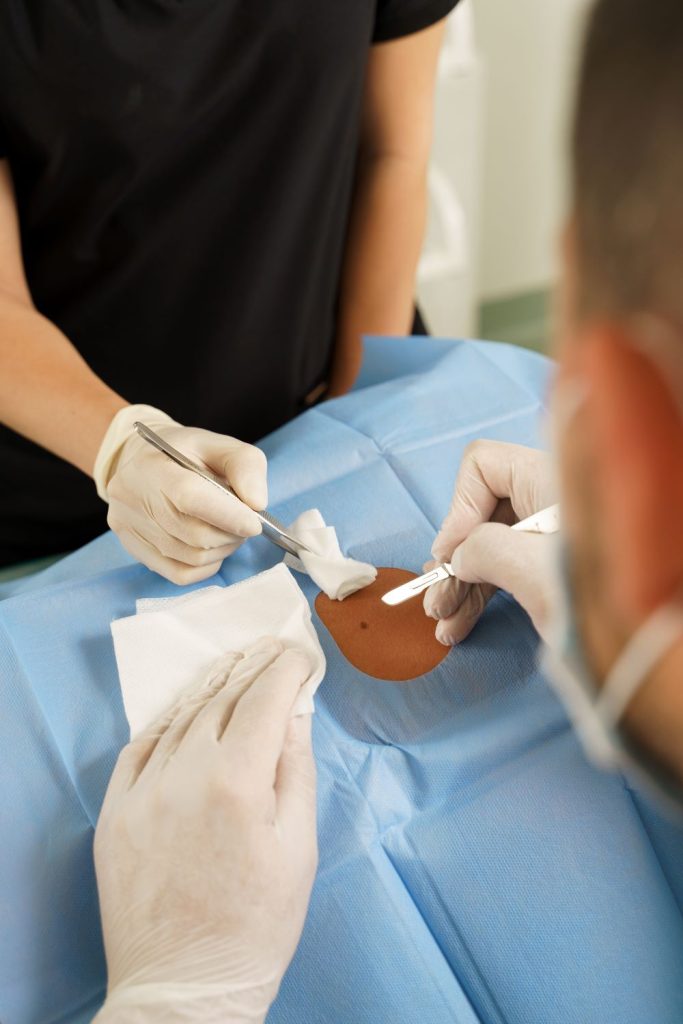
A skin biopsy is a small procedure where a sample of skin is removed so it can be examined under the microscope by a pathologist. This is the most reliable way to determine whether a lesion is harmless or cancerous. Different biopsy techniques are used depending on the type, size, and location of the lesion.
Skin Cancer Clinic Mount Martha

About Skin Cancer
Shave Biopsy

Shave Biopsy

A shave biopsy is a simple and quick technique.

  • The area is marked with pen and cleaned with antiseptic.
  • Local anaesthetic is injected to numb the skin.
  • The top layer of skin (including the lesion) is shaved off with a fine blade and sent to the pathologist.
  • Treat a shave biopsy like a graze.
  • For the first 2 days: leave the dressing intact and keep the area dry.
  • For pain relief: use paracetamol (Panadol). Avoid ibuprofen (Nurofen) as it can increase bleeding.
  • After 2 days: remove the dressing in the shower.
    • You may notice a seaweed (alginate) dressing under the tape. This looks hard on the outside and moist inside — this is normal. It will soften in water and wash away.
  • Clean the wound gently with water and apply a thin layer of Vaseline or PawPaw ointment. Moist wounds heal better than scabby ones.
  • If oozing, protect with a Band-Aid until dry.

⚠️ Contact the clinic if you notice increasing swelling, pain, or redness after 3 days — this may indicate infection.

Punch Biopsy

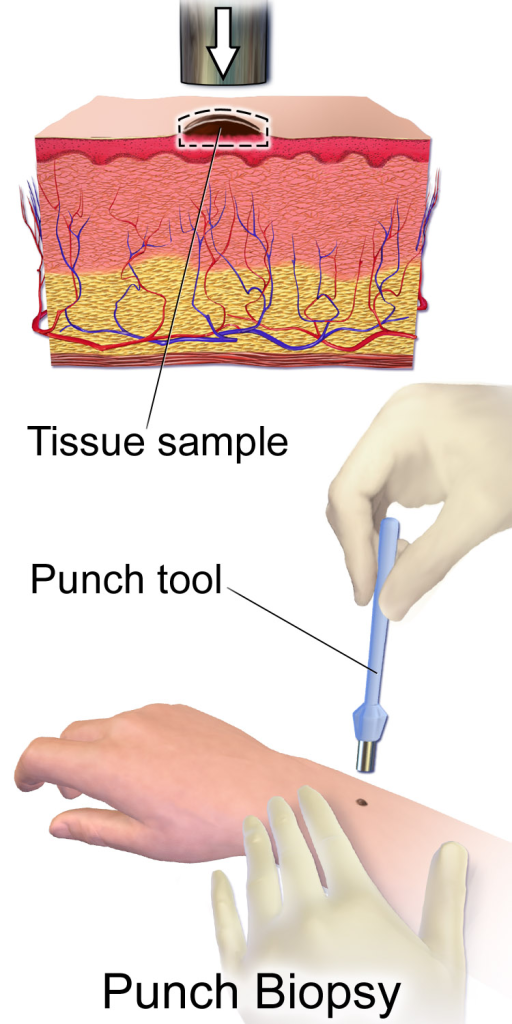
A punch biopsy removes a circular “core” of skin using a sharp, round instrument.

  • The area is marked and cleaned, and local anaesthetic is injected.
  • A small circular plug of skin is removed and sent to the pathologist.
  • The wound may be closed with a suture, or occasionally left to heal naturally.
  • A splash-proof dressing is applied (suitable for showers, but not swimming or soaking).
  • When the anaesthetic wears off, mild discomfort and spotting of blood are normal.
  • If bleeding soaks the dressing, apply firm pressure for 10 minutes without lifting. Replace with a fresh dressing afterwards.
  • Keep the dressing intact and dry for 2 days.
  • Ice packs can help with discomfort, bruising, or swelling.
  • For pain relief: use paracetamol (Panadol). Avoid ibuprofen.
  • Sutures are usually removed after 5–14 days, depending on location (your doctor will advise).
  • If the dressing gets wet or dirty:
    • Remove it carefully using salty water.
    • Gently dab clean, pat dry, and re-cover with a non-stick dressing.

⚠️ Contact the clinic if you notice increasing pain, redness, or swelling after 3 days — this may indicate infection.
Excisional Biopsy

Excisional Biopsy

An excisional biopsy is performed when the whole lesion needs to be removed for diagnosis. This is especially important if there is concern for melanoma, as partial sampling is not reliable.

  • The lesion is marked and a safety margin is drawn around it.
  • Local anaesthetic is injected, and the lesion is removed in the shape of an ellipse.
  • The wound is then sutured closed, usually with a combination of dissolving and non-dissolving stitches.
  • The specimen is sent in its entirety to the pathologist for assessment.
  • Care is the same as for a punch biopsy.
  • Mild pain or spotting of blood is normal once the anaesthetic wears off.
  • If bleeding occurs, apply firm pressure for 10–15 minutes. If bleeding does not stop, contact the clinic.
  • Keep the dressing dry and intact for 2 days, then follow the same steps as for punch biopsy wound care.
  • Sutures will usually need removal — your doctor will advise the timing.
  • You may or may not have dissolving sutures placed in the deeper layer of the wound.
  • Occasionally, a knot from one of these sutures does not fully dissolve and works its way to the skin surface.
  • This can appear as a small lump, pimple, or sharp sensation, and may develop anywhere from 2 weeks to 2 months after surgery.
  • It may look a little red, itchy, or mildly sore.
  • This is not a sign of infection. It simply means the suture needs to be removed.
  • If this happens, please contact the clinic and we will remove it for you.

⚠️ Contact the clinic if you notice increasing pain, swelling, redness, or fever — this may indicate infection.

Join Our Mailing List